About Us

We are AI Transformation Partners.

We work with companies that have built something genuinely better than the market leader — and are being out-sold by competitors with weaker products and louder distribution.

Ayra AI Solutions Inc. builds AI Employees for B2B companies with real sales complexity: long procurement cycles, several distinct buyer types, and a technical product that needs explaining before anyone signs. We deploy into the stack you already run, Salesforce included, so your team keeps working the way it works today.

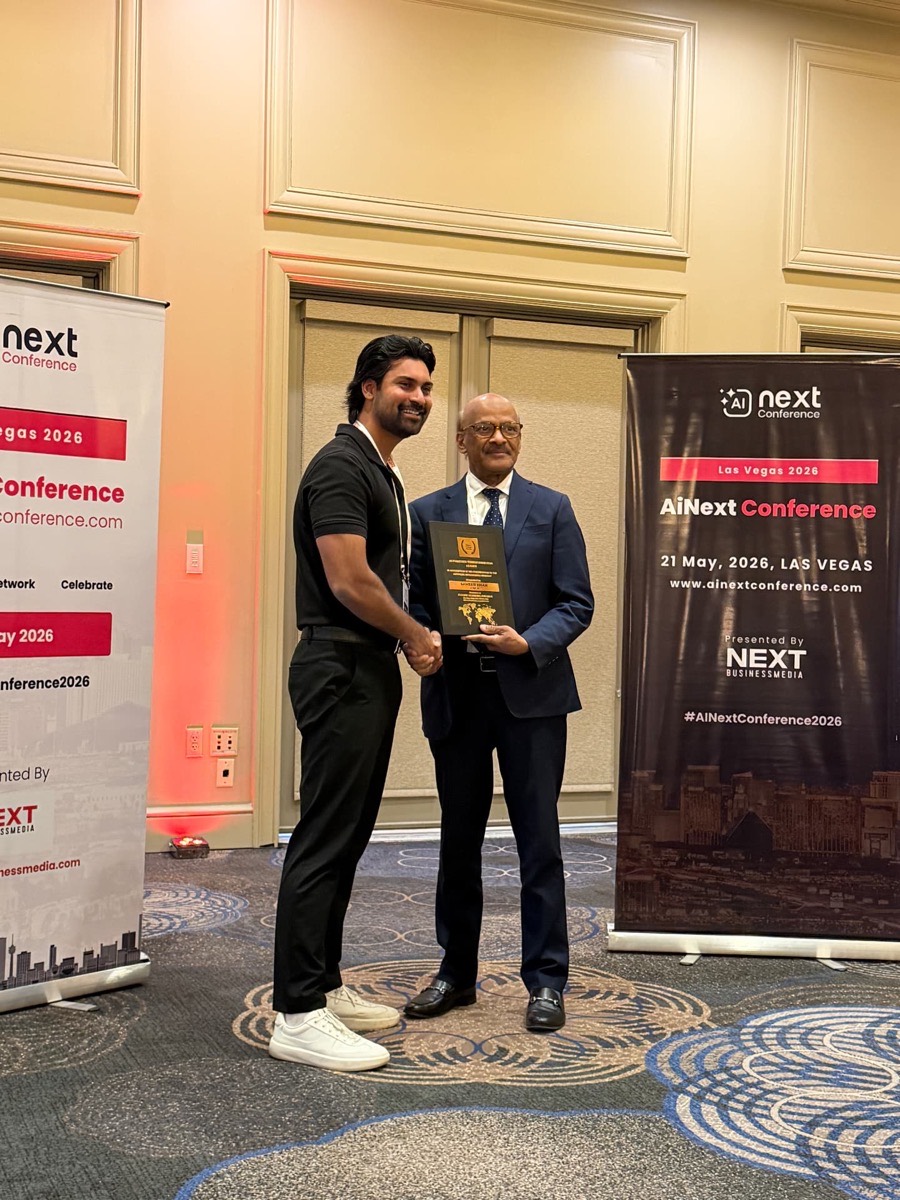
Sameer Khan accepting the AI Powered Transformation Partner award at the AiNext Conference, Las Vegas, May 2026.
AI Powered Transformation Partner Award · AiNext Conference, Las Vegas, May 2026

Recognised for the work, not the pitch

Named AI Powered Transformation Partner at the AiNext Conference in Las Vegas, May 2026 — for deployments already running in production, not concepts.

Your AI Employee Team

Three AI Employees.
One integrated team.

One handles everyone who comes to you. One makes sure people keep coming. One goes out and finds the buyers before your competitors know they exist.

AI Employee 01

The Front Desk

Answers every inbound conversation, 24/7, in Noodoe's voice.

AI Employee 02

The Content Team

Keeps your social presence consistent without taking your team off customer work.

Star AI Employee 03

Deep Lead Generation

Finds companies at the moment they signal they're about to buy EV charging.

AI Employee 01

The Front Desk

Somebody messages you at 11 PM on a Saturday. Today they wait until Monday. With the Front Desk they get a real, qualified answer in sixty seconds.

Where it works

  • Website live chat — answered instantly
  • Instagram DMs and comments — answered instantly
  • LinkedIn — monitored, with replies drafted for one-click send
  • Voice AI FAQ deflection on one support line

What it does

  • Answers in Noodoe's voice, not a generic chatbot script
  • Qualifies against your ideal customer profile
  • Books qualified prospects straight onto the right calendar
  • Never sleeps, never misses a weekend
  • We never automate a personal LinkedIn account — it breaches LinkedIn's terms and puts the account at risk. We draft, your team sends.

What your team sees

  • Every interaction logged to Salesforce
  • Slack alert the moment a hot lead comes in
  • Full conversation history attached to the record
  • Nothing sits unanswered in an inbox
AI Employee 02

The Content Team

You have one of the strongest product stories in this category. The problem isn't the story — it's that publishing it consistently costs your team hours they don't have.

Every morningResearch

Reads competitor activity, industry news, funding and policy updates, and your own blog and press — so every post is grounded in something real that happened, not generic filler.

DraftsWeekly output

3 to 5 LinkedIn posts and 4 to 7 Instagram posts per week, written in Noodoe's voice, with accompanying graphics and carousels built from your brand assets. In the first weeks we sit down with you or whoever you nominate and learn how you talk about the product, what you want to be known for, and what you'd never want your name attached to.

Your approval5–10 minutes a day

Everything lands in a queue. You approve, edit or reject. Nothing publishes without a human saying yes. Early on we'd insist on this — it's how the voice gets right.

PublishingAutomatic

Approved posts publish themselves on schedule, at the times each platform actually rewards.

ReportingWeekly and monthly

Weekly performance report on what landed. Monthly strategy adjustment based on what the data says, not what we assumed in month one.

Star AI Employee 03

Deep Lead Generation

This is the part that isn't a marketing agency pitch.

What everyone else does

Pull a list of job titles at companies that look like a fit. Send generic cold email. Hope one percent reply. That approach is worn out — and email and LinkedIn now actively penalise generic AI-written outreach.

What we do instead

We don't guess who might want EV charging. We watch public data for the moment a company tells the world they're about to install it — then reach out that week, referencing the exact thing they did.

2,770+

Permit jurisdictions

Covering roughly 85% of the US population.

6

Signal categories

Permits, grants, procurement, hiring, executive activity, ESG.

1

Reason it works

In this industry, buying is almost always triggered by a public event.

The Mechanism

How STAR works.

Five steps, running continuously.

  1. Detect

    Pull public data on a schedule and flag anything that indicates a company is moving on EV charging — a permit filed, a grant won, an RFP opened, a role posted, an executive talking about electrification.

    Shovels national permit database · SAM.gov federal procurement · state and utility grant award lists · public job boards · direct municipal permit feeds, added for priority metros as we scale
  2. Match

    Identify which company is behind the filing and whether they belong to one of your six segments — multifamily portfolios, hospitality, charging networks and CSPs, commercial fleets, dealer groups, or public sector. Anything outside your ICP is dropped before it costs anyone time.

  3. Enrich

    Find the person who would actually sign, and their verified email, LinkedIn and direct line. Not a general info@ address — the Director of Ancillary Revenue at that specific property group, by name.

    Sales Navigator · Apollo · Clay
  4. Reach out

    Personalised email sequences from properly warmed sending infrastructure, with every message referencing the specific signal that triggered it. The agent handles the first reply, qualifies the response, and books the meeting. LinkedIn touches are drafted alongside each sequence for your team to send from their own accounts — same intelligence, none of the account risk.

  5. Hand off

    The qualified meeting goes to whoever owns that territory, and the full history syncs to Salesforce. Routing follows your org chart — we configure it to how you already assign accounts, not the other way round.

The Signals

What we watch, and why each one matters.

All of this is public. Nobody in your category is systematically pulling it together. That's the opportunity.

SignalWhat it tells usWhere it comes from
EV charger building permits The strongest signal there is. They've committed budget and told the city. Installation is weeks away — and the software decision usually isn't made yet. Shovels API across 2,770+ jurisdictions, plus direct city portals in priority metros for faster turnaround
Grant and incentive awards They have money that must be spent on charging, often with compliance requirements attached that favour your platform. NEVI state award lists, CFI, CALeVIP, NYSERDA, MassEVIP, NJ It Pay$ To Plug In, SCE / PG&E / SDG&E utility rebates
Open procurement and RFPs They are actively asking vendors to bid, right now, in writing. SAM.gov, BidNet, GovWin, DemandStar — filtered for charging management software and network operator language
Hiring activity A company posting for an OCPP developer or a charging network manager is building a programme internally and will need a platform. LinkedIn and job boards
Executive activity A decision-maker publicly discussing fleet electrification or charging is telling you their priority for this quarter. LinkedIn posts from named titles in the last 30 days
Corporate commitments An ESG report with a dated EV charging target is a deadline somebody now has to hit. Published sustainability reports, new construction filings with EV parking counts, renovation announcements
In Practice

What this actually looks like.

A property manager in Sacramento files a permit for twenty EV charging installations at their 400-unit apartment complex.

Step one

The permit appears in our data. We flag it as multifamily, California, twenty ports — squarely in segment one.

Step two

We identify the property group behind the filing and find their Director of Ancillary Revenue, with verified email, LinkedIn and phone.

Step three

They receive a message that references the permit they just filed at that specific property — and an offer to talk to whoever covers California.

Why it works

They are not being interrupted. They are being contacted about the exact project they are currently working on, in the week they are working on it, by the one vendor who noticed. That is a fundamentally different conversation to a cold email — and it's the difference between traditional outbound and AI-native outbound.

On timing, honestly

National permit data refreshes on a fixed cycle — twice a month — and we act within 48 hours of each refresh. For priority metros we pull city portals directly, which is considerably faster. We'd rather tell you the real cadence up front than promise same-day nationally and miss it.

Handover

Where the leads go.

None of this replaces anyone on your sales team. It makes sure the conversations they take are with people who are already qualified.

Routing follows your territory

A signal from a state goes to whoever owns that state. Eastern US to Justin. West, Midwest and Canada to Ryan. Round-robin, by segment, or by account size — whatever matches how you already work. It's a configuration, not a rebuild.

Salesforce stays clean

Every target is checked against your existing records before anything is created, so we're not generating duplicates or touching an account someone is already working. Lead versus contact, and what happens on a collision, are your rules — agreed at kickoff.

Your team keeps control

Messaging is approved by you before anything sends. Any account can be excluded from outreach at any time. Nothing goes out under your name that you haven't signed off.

Timeline

From signature to a fully staffed front office in 90 days.

Three phases, one agent at a time. Each one is live and working before we start the next.

Phase 1Days 1–30 · The Front Desk

Kickoff, voice and persona training, and the Salesforce integration. Website chat goes live first, with Instagram following as the platform approvals we file on day one come through. Every conversation answered, qualified and logged from the moment each channel switches on. Sending domains begin warming in the background for phase three.

Phase 2Days 31–60 · The Content Team

Research and drafting begin, your approval queue goes live, and publishing settles into a consistent weekly cadence in Noodoe's voice. By the end of the phase your social presence is running without anyone on your team having to think about it.

Phase 3Days 61–90 · Lead Generation

STAR comes online. Signal detection runs on schedule, qualified targets are enriched, and outreach starts at a controlled volume that scales as we learn what lands. The phase closes with a full review of what the system produced — signals detected, targets contacted, conversations started, everything visible in Salesforce — so the next quarter gets planned on data rather than on how it felt.

Kickoff

What we'd need from you.

Short list, and most of it is one session each.

Access

  • API access to Salesforce — around 30 minutes with whoever administers it
  • Instagram and LinkedIn company page permissions, so we can file the platform approvals on day one
  • Call forwarding on the support line we deflect FAQs from
  • Website chat placement — a single script tag

Voice and judgement

  • A session with you, or whoever you nominate, on how Noodoe talks
  • One person to own the content approval queue — 5 to 10 minutes a day
  • Your ideal customer criteria, so the agent qualifies the way you would

Rules of the road

  • Territory and lead routing rules
  • Any accounts to exclude from outreach
  • Your Salesforce conventions for leads and duplicates

Not included: paid advertising, website redesign, custom photography and video production, Salesforce licensing, and any paid procurement or data subscriptions added later. Cold email tooling runs roughly $200 to $400 monthly and permit data licensing roughly $600 monthly, both passed through at cost. Go-live dates for Instagram and LinkedIn depend on each platform's own approval process, which we file on day one and cannot expedite.

Next Steps

Ready when you are.

01

Confirm scope — the full three-employee build, including STAR.

02

Contract sent and signed.

03

Development cost paid.

04

Kickoff call within 2 to 3 business days.

05

Monthly retainer begins after launch — not before.

The short version

You've built the strongest platform in the category. This is how the buyers find out.

Sameer Khan · Founder, Ayra AI Solutions Inc.
sameer@ayra.cx · 647-308-2008 · ayra.cx